
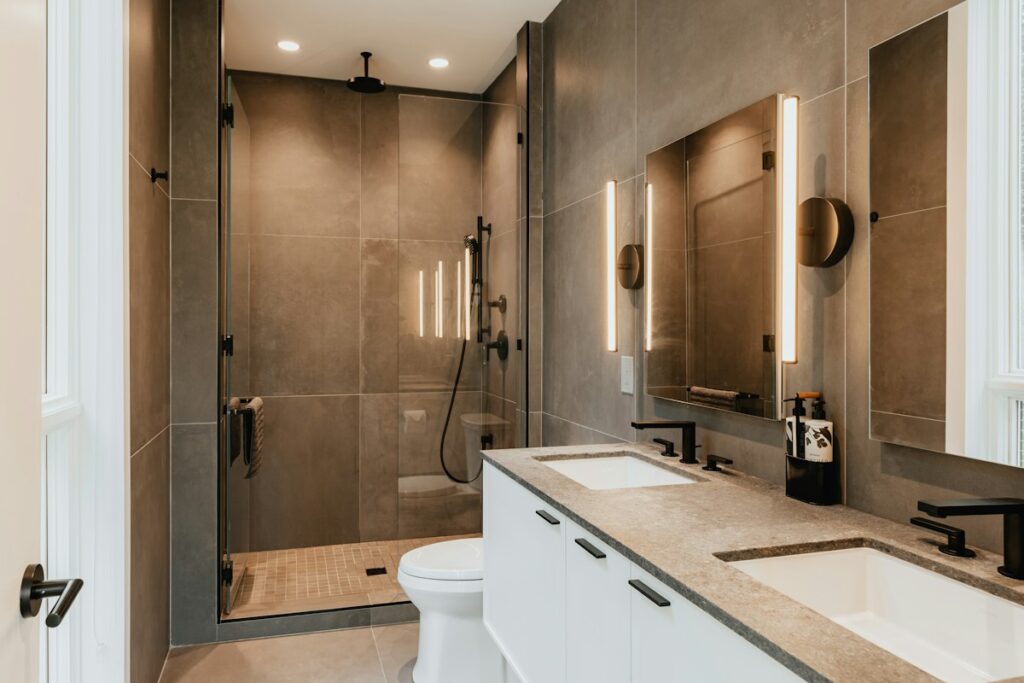
A basement bathroom addition typically costs between $8,000 and $25,000 depending on plumbing complexity, and the single biggest factor is whether your basement floor sits below the main sewer line — if it does, you’ll need a sewage ejector pump system rather than gravity-fed drainage. Beyond that pump decision, the project involves breaking concrete for new drain lines, running supply plumbing, adding ventilation, and meeting the same code requirements as any full bathroom. Here’s what actually goes into the project, room by room of the process.
The Core Question: Ejector Pump or Gravity Drain
Most basement floors sit lower than the home’s main sewer line where it exits to the street or septic system, which means wastewater can’t simply flow downhill to the sewer the way it does from an upstairs bathroom. A sewage ejector system solves this: the toilet, sink, and shower drain into a sealed basin with a pump that macerates and pushes waste up and over to the existing sewer line. If your basement happens to sit above the sewer line’s exit point — worth confirming with a plumber who can check the invert elevation — you may be able to use a standard gravity-drain layout, which is meaningfully cheaper. Budget $1,500 to $3,000 for the ejector system and its installation if you need one, on top of standard plumbing costs.
Full Cost Breakdown
Plumbing: $3,000-$8,000
This includes breaking and repouring sections of the concrete slab to run new drain and vent lines, installing the ejector pump if needed, and running supply lines from the nearest existing plumbing. Concrete-breaking labor is often the most underestimated cost in this whole project.
Framing and Drywall: $1,500-$3,500
Basements are notorious for irregular wall lines around support posts, ductwork, and the sewer line’s cleanout access — framing has to work around all of it, which increases labor time versus framing a bathroom on a normal floor plan.
Ventilation: $500-$1,200
Code requires either a window or a mechanical exhaust fan vented to the exterior, not just into the joist bay. Basements often need a slightly longer duct run to reach an exterior wall or rim joist, which adds labor.
Fixtures and Finishes: $2,000-$8,000+
This range swings enormously based on whether you choose builder-grade fixtures and vinyl flooring or a tiled shower with a mid-range vanity. Waterproofing the shower area properly — with a proper membrane system, not just tile mastic — is not optional in a below-grade space where moisture problems compound quickly.
Permitting and Code Requirements
A basement bathroom is a full plumbing and electrical permit project in nearly every jurisdiction — this is not a weekend DIY-and-hope situation. Inspectors will check the ejector pump installation, backflow prevention, GFCI protection on outlets, proper venting (both for plumbing and for any exhaust fan), and ceiling height clearance, which in many codes must be at least 7 feet in the bathroom area even if the rest of the basement has lower clearance from ductwork. Skipping permits doesn’t just risk fines; it can complicate a future home sale when a buyer’s inspector flags an unpermitted bathroom.
Moisture Control: The Step People Underestimate
Before any framing begins, address the basement’s existing moisture situation. If you have any history of dampness, a French drain and sump pump system should go in first, and walls should be furred out with a vapor barrier rather than framing directly against exterior concrete. Adding a bathroom — with its own water source and steam — into a basement that already struggles with humidity is a reliable way to grow mold behind new drywall within a year.
Timeline
Expect four to seven weeks from permit approval to finished bathroom for a straightforward project, longer if the ejector pump installation reveals unexpected plumbing routing issues once the slab is opened up. Add two to four weeks on the front end for permit review in most municipalities.
Frequently Asked Questions
How much does a basement bathroom addition cost on average?
Most homeowners spend $8,000 to $25,000 total, with the wide range driven mainly by whether an ejector pump system is required and how finished the fixtures and tile work are.
Do I need a sewage ejector pump for a basement bathroom?
You need one if your basement floor sits below the elevation of your home’s main sewer line, which is the case in most basements. A plumber can confirm this with an elevation check.
Can I add a basement bathroom without a permit?
You shouldn’t. Nearly every jurisdiction requires plumbing and electrical permits for a new bathroom, and unpermitted work can create problems when selling the home.
How long does a basement bathroom addition take?
Typically four to seven weeks of construction after permits are approved, plus two to four weeks of permit review time upfront.
Does a basement bathroom need special ventilation?
Yes — code requires an exhaust fan vented to the exterior (or a window, which is rare in basements), since basements already tend to trap humidity.
For complex structural, electrical, gas, and other safety-critical work, consult a qualified professional and check local requirements.
Read Next
All articles →
Budgeting a Mid-Range Kitchen Remodel: What Your Money Actually Buys
Focus keyword: mid-range kitchen remodel cost The single biggest source of frustration in kitchen renovations isn’t the mess or the timeline…
Read the guide →
Small Bathroom Remodel: Where to Splurge and Where to Save
Focus keyword: small bathroom remodel budget
Read the guide →
Engineered vs. Solid Hardwood Flooring: Which Is Right for an Old House
Solid hardwood is generally the better match for an old house because it can be sanded and refinished many times over…
Read the guide →