
The 12 Essential Tools Every New Homeowner Should Own Before Tackling Fall Projects
If you just moved into your first house, or you’ve been renting tools from a neighbor every time something needs fixing, fall is a good time to build out a core tool kit. Cooler weather means more weekends spent on maintenance and small projects around the house, and having the right basics on hand means you’re not making a hardware store run in the middle of every job. You don’t need a garage full of specialty equipment — these twelve tools will cover the vast majority of what comes up in a typical home.
Measuring and Layout
Tape measure. A 25-foot tape measure with a locking mechanism handles everything from hanging curtains to measuring for furniture. It’s one of the most-used tools in any home, so it’s worth spending a little more for one with a sturdy case and an easy-to-read blade.
Level. A basic 24-inch level ensures shelves, picture frames, and mounted TVs actually look right instead of subtly crooked. Many newer levels include a laser or digital angle readout, but a simple bubble level does the job for most household tasks.
Stud finder. Before hanging anything heavier than a small picture frame, you need to know where the wall studs are. An inexpensive electronic stud finder saves you from a wall full of unnecessary holes and gives you a secure anchor point for shelves, TV mounts, and curtain rods.
Fastening and Driving
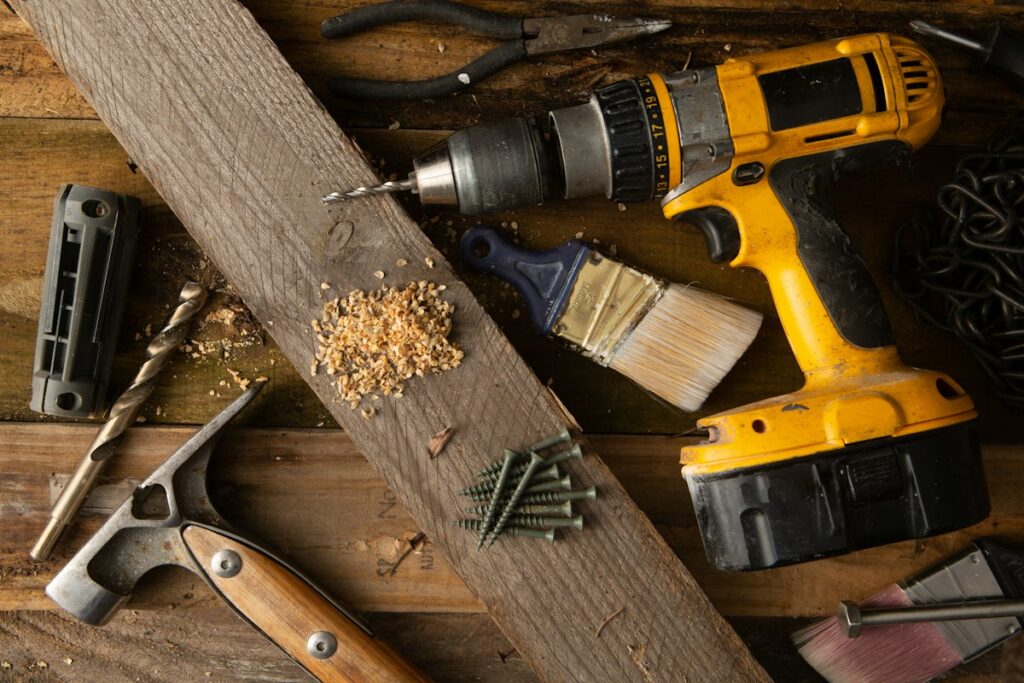
Cordless drill/driver. This is the single most useful power tool for a homeowner — it drills holes and drives screws, and with the right bits it handles everything from assembling furniture to installing shelving. Look for one that comes with at least two batteries so you’re never caught with a dead battery mid-project.
Screwdriver set. Even with a cordless drill, a manual set with both Phillips and flathead tips in a range of sizes comes up constantly for small adjustments, tight spaces, and delicate work where a power driver is overkill.
Hammer. A standard 16-ounce claw hammer handles picture hanging, small repairs, and the occasional need to pull a nail with the claw end.
Adjustable wrench. One or two adjustable wrenches in different sizes cover most plumbing and furniture-assembly needs without requiring a full socket set.
Cutting and Prying
Utility knife. Useful for everything from opening boxes to scoring drywall and trimming caulk lines. Keep spare blades on hand, since a dull blade is more likely to slip than a sharp one.
Pliers set. A combination of slip-joint pliers and needle-nose pliers covers most gripping, bending, and small-parts tasks around the house, from tightening a loose connection to pulling a stuck nail.
Caulk gun. With fall weatherproofing on most homeowners’ to-do lists, a basic caulk gun is essential for sealing gaps around windows, doors, and trim.
Safety and Support
A sturdy stepladder. Choose one rated for your weight plus whatever you’re carrying, and always set it on a flat, stable surface. Keep your body centered between the rails rather than leaning to one side, avoid standing on the top rung or top cap, and have someone nearby when you’re working at height, especially outdoors near gutters or on uneven ground.
Basic safety gear. Safety glasses, work gloves, and a dust mask or respirator cost very little and prevent the most common minor injuries — flying debris, splinters, and dust from sanding or insulation work. Keep them with your tools so there’s no excuse to skip them.
Buying Quality Where It Counts
You don’t need to buy the most expensive version of every tool on this list, but a few are worth spending a bit more on. A cordless drill from a reputable brand will hold up far better over years of use than a bargain-bin model, and buying into a single brand’s battery platform means future tools — a circular saw, an impact driver, a shop light — can share the same batteries you already own. Your ladder is the other place not to cut corners: check the weight rating printed on it, make sure it includes your own body weight plus anything you’re carrying, and never exceed it.
For everything else on this list — screwdrivers, pliers, a hammer, a utility knife — a mid-range option from any well-known hardware brand will serve a typical homeowner well for years. These are simple mechanical tools without batteries or motors to wear out, so the main things to look for are a comfortable grip and solid construction rather than a specific brand name.
Worth Adding as You Go
A flashlight or headlamp for attic, crawl space, and basement work, a five-in-one painter’s tool for scraping and opening paint cans, and a shop vacuum for cleanup are all things you’ll likely want within your first year or two of homeownership, even if they’re not day-one essentials.
Storage Matters Too
Once you’ve collected these tools, a basic toolbox or a wall-mounted pegboard keeps everything visible and easy to grab, which matters more than it sounds — a tool you can’t find is a tool you’ll end up buying twice. Keep everything in one place, ideally somewhere dry, and you’ll find yourself reaching for your own tools instead of borrowing from a neighbor for the vast majority of projects that come up.
Quick-Reference List
- Tape measure
- Level
- Stud finder
- Cordless drill/driver
- Screwdriver set
- Hammer
- Adjustable wrench
- Utility knife
- Pliers set
- Caulk gun
- Sturdy stepladder
- Safety glasses, gloves, and a dust mask
None of this needs to be bought all at once, and you don’t need premium versions of everything to start. Build the kit out over your first few projects, buy quality where it matters most — the drill, the ladder, and your safety gear — and you’ll be ready for nearly anything fall throws at your house.
For complex structural, electrical, gas, and other safety-critical work, consult a qualified professional and check local requirements.
Read Next
All articles →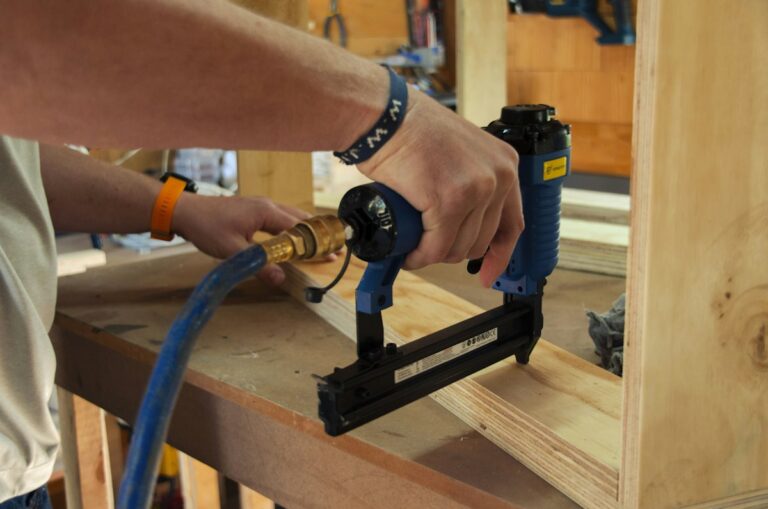
Cordless vs. Corded Impact Drivers: Which One Actually Belongs in Your Toolbox
For the vast majority of homeowners, a cordless impact driver is the better choice over a corded one, because modern brushless…
Read the guide →
PEX-A vs. PEX-B: Which to Choose for a DIY Repipe
PEX-A and PEX-B compared on flexibility, fittings, cost, and code acceptance to help you choose the right pipe for a DIY…
Read the guide →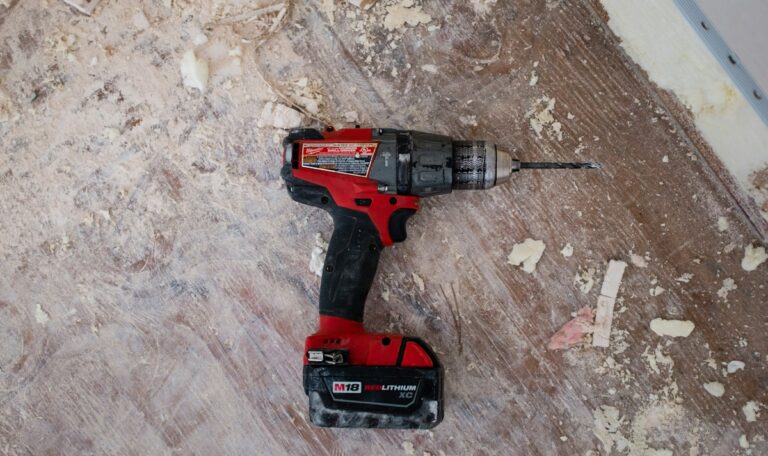
Oscillating Multi-Tool vs. Jigsaw: Which One Actually Earns Space in a DIYer’s Garage
Oscillating multi-tool vs. jigsaw compared on real jobs — flush cuts, curves, plunge cuts, and price — to help you pick…
Read the guide →