
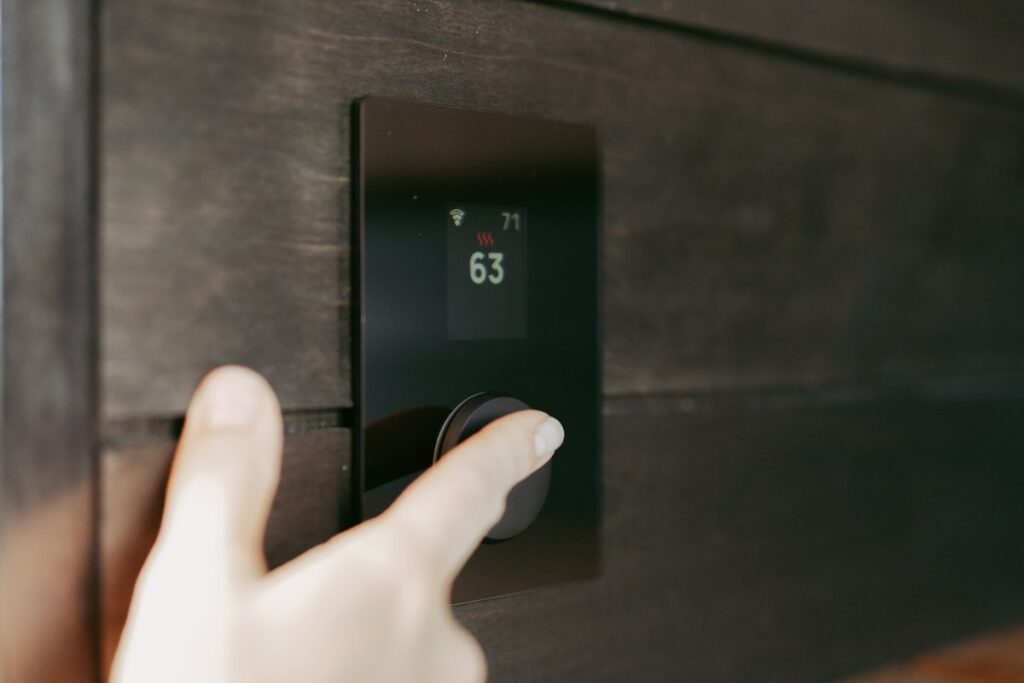
Smart thermostats are one of the rare smart home upgrades that pay for themselves rather than just adding convenience. By learning your schedule, adjusting automatically when you’re away, and giving you precise control from your phone, a smart thermostat can meaningfully cut heating and cooling waste in a typical home. With fall settling in and furnaces about to run daily, now is a practical time to install one before you need it most. Here’s what to know before buying, how installation typically works, and how to get the most savings out of one once it’s running.
What a Smart Thermostat Actually Does
At its core, a smart thermostat replaces your old mechanical or basic digital thermostat with one that connects to Wi-Fi, learns or lets you program a detailed schedule, and can be adjusted remotely through a smartphone app. Many models also use occupancy sensors, geofencing (detecting when your phone, and presumably you, leaves or approaches home), and local weather data to fine-tune heating and cooling automatically. Some integrate with voice assistants and other smart home devices, letting you adjust temperature by voice or as part of broader automation routines.
Compatibility Comes First
Before buying anything, check what type of heating and cooling system your home has. Most smart thermostats work well with standard central forced-air furnaces and heat pumps, but compatibility can get more complicated with systems like multi-stage heating and cooling, radiant heat, or older systems that lack a common (“C”) wire, which some smart thermostats need for consistent power. Nearly every major smart thermostat manufacturer offers a free online compatibility checker where you enter your current thermostat’s wiring labels; use it before purchasing; if your system lacks a C-wire, look for a model with a built-in alternative or budget for a simple adapter.
Installing a Smart Thermostat Safely
Installation is a common DIY project, but it does involve working with low-voltage wiring, so a few safety steps matter. Before touching any wires, turn off power to your HVAC system at the circuit breaker, not just at the thermostat, since the thermostat itself typically runs on low-voltage current that doesn’t fully de-energize the system. Take a clear photo of your existing wiring and the terminal labels before disconnecting anything, since this is your backup reference if something doesn’t match the new thermostat’s labeling. Label each wire as you remove it, and match wires to the same letter terminals on the new unit, consulting the installation guide for any differences.
If your home does not use standard forced-air heating and cooling, if you’re uncomfortable working with any electrical wiring, or if the wiring doesn’t clearly match the installation instructions, hire a licensed HVAC technician or electrician rather than guessing; miswiring can damage the thermostat or, in some cases, the HVAC system’s control board.
Getting the Most Out of It Once It’s Installed
A smart thermostat only saves energy if it’s actually set up to run efficiently. Take the time to build a real schedule that lowers the heat a few degrees while you’re asleep or away, rather than leaving it at one constant temperature around the clock; a commonly cited energy-saving range is turning the thermostat back 7 to 10 degrees for eight hours a day, which various energy-efficiency sources estimate can save around 10 percent annually on heating and cooling costs, though actual savings vary by home, climate, and habits. Let the learning features run for a week or two before judging them, since many models need a short adjustment period to understand your patterns. Take advantage of the energy usage reports most apps provide, which can reveal unexpectedly long run times tied to a dirty filter, a leaky duct, or a thermostat placed in a spot with bad airflow, like direct sunlight or near a drafty window.
Choosing Between Models
Features vary, but a few things are worth prioritizing: broad HVAC compatibility for your specific system, a clear and easy-to-use app, genuine geofencing or occupancy detection rather than a fixed schedule alone, and good customer support or an active user community if you run into installation questions. Many utility companies offer rebates for ENERGY STAR-certified smart thermostats, so check with your provider before buying, since a rebate can meaningfully offset the upfront cost.
Smart Thermostat Checklist
– Check your HVAC system type and wiring compatibility before buying
– Turn off power at the breaker before disconnecting any thermostat wiring
– Photograph and label existing wires before removing the old thermostat
– Match wires carefully to the new unit’s terminals using the installation guide
– Call a licensed professional if wiring doesn’t match or you’re unsure
– Build a real setback schedule rather than leaving one constant temperature
– Give learning features one to two weeks to adjust to your routine
– Check for local utility rebates on ENERGY STAR-certified models
A Few Habits That Boost the Savings
Even the smartest thermostat can’t compensate for a system working against itself. Keep vents and radiators free of furniture and curtains so conditioned air actually reaches the room the thermostat is reading. Replace furnace filters on the schedule recommended by the manufacturer, since a clogged filter forces the system to run longer and harder, undercutting any savings from smarter scheduling. If your home has noticeably warmer and cooler rooms, a smart thermostat with remote room sensors, offered by several manufacturers, can average the temperature across multiple rooms instead of relying on a single reading from the hallway where the thermostat happens to be mounted.
Is It Worth It?
For most homeowners with a standard forced-air system, a smart thermostat is a low-risk, high-value upgrade: the installation is approachable for a confident DIYer, the cost is modest compared to most home improvements, and the ongoing savings compound every single heating and cooling season. Combined with the other fall maintenance basics, like a clean furnace filter and sealed drafts, a smart thermostat rounds out a genuinely more efficient, more comfortable home heading into winter.
For complex structural, electrical, gas, and other safety-critical work, consult a qualified professional and check local requirements.
Read Next
All articles →Fall Home Maintenance Checklist: 12 Tasks to Finish Before the First Freeze
Once the overnight temperatures start dipping toward freezing, the window for easy, comfortable outdoor maintenance starts to close fast. A weekend…
Read the guide →
How to Seal Drafty Windows and Doors Before Winter: A Weatherproofing Guide
How to Seal Drafty Windows and Doors Before Winter: A Weatherproofing Guide If your heating bill climbs every winter and certain…
Read the guide →